
 简中
简中In modern photovoltaic (PV) installations, system reliability, safety, and efficiency depend heavily on how individual solar strings are managed and protected. One of the most critical components enabling this integration is the combiner box. Understanding the function of a combiner box in a photovoltaic system is essential for system designers, EPC contractors, and facility owners aiming to optimize performance and long-term stability.
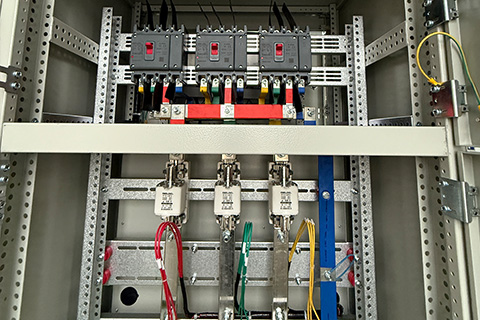
A combiner box is an electrical enclosure that consolidates the output of multiple photovoltaic strings into a single DC output. In large-scale installations—whether rooftop commercial systems or utility-scale solar farms—dozens or even hundreds of PV modules are wired in series to form strings. These strings must then be paralleled before feeding into a central or string inverter. The combiner box performs this aggregation safely and efficiently.
The primary function of a combiner box is current consolidation. Each PV string carries direct current (DC), and the combiner box merges these currents into a single output busbar. By reducing the number of conductors routed to the inverter, it simplifies wiring architecture, minimizes cable losses, and lowers installation complexity. This streamlined design contributes to improved balance-of-system (BOS) cost control.
Beyond aggregation, protection is a core responsibility of the combiner box. It typically integrates string-level overcurrent protection using DC fuses or circuit breakers. These protective devices prevent reverse current and fault propagation in the event of a short circuit or module failure. Many combiner boxes also include surge protective devices (SPDs) to guard against transient overvoltage caused by lightning or grid disturbances. In outdoor environments, robust enclosure ratings such as IP65 or NEMA 4X ensure resistance to dust, moisture, and UV exposure.
Monitoring capability is another advanced function increasingly integrated into modern combiner box designs. String-level monitoring modules measure current, voltage, and sometimes temperature. These data points are transmitted to supervisory control and data acquisition (SCADA) systems, enabling real-time performance diagnostics. Early detection of string imbalance, degradation, or shading losses significantly enhances operational efficiency and reduces maintenance costs.
From a system engineering perspective, the combiner box also contributes to safety compliance. It often includes a DC disconnect switch, allowing technicians to isolate the photovoltaic array from downstream equipment during maintenance or emergency situations. This feature is critical for meeting electrical codes and standards such as NEC requirements in the United States or IEC standards internationally.
In utility-scale photovoltaic plants, centralized combiner boxes may handle dozens of inputs and feed into a central inverter, whereas in distributed generation systems, smaller string-level combiner boxes are paired with string inverters. The configuration depends on system topology, voltage level, and project scale.
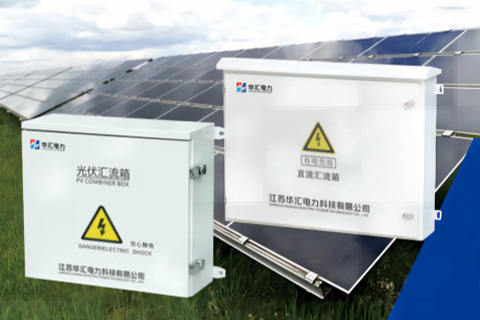
In summary, the combiner box plays a vital role in photovoltaic systems by consolidating DC outputs, providing overcurrent and surge protection, enabling monitoring, and enhancing operational safety. Its integration directly influences system reliability, maintainability, and long-term performance. For any professional involved in solar energy system design or procurement, selecting a high-quality combiner box is not merely a component choice—it is a strategic decision that impacts the overall efficiency and durability of the PV installation.